
2024年强化学习求解调度文章大盘点
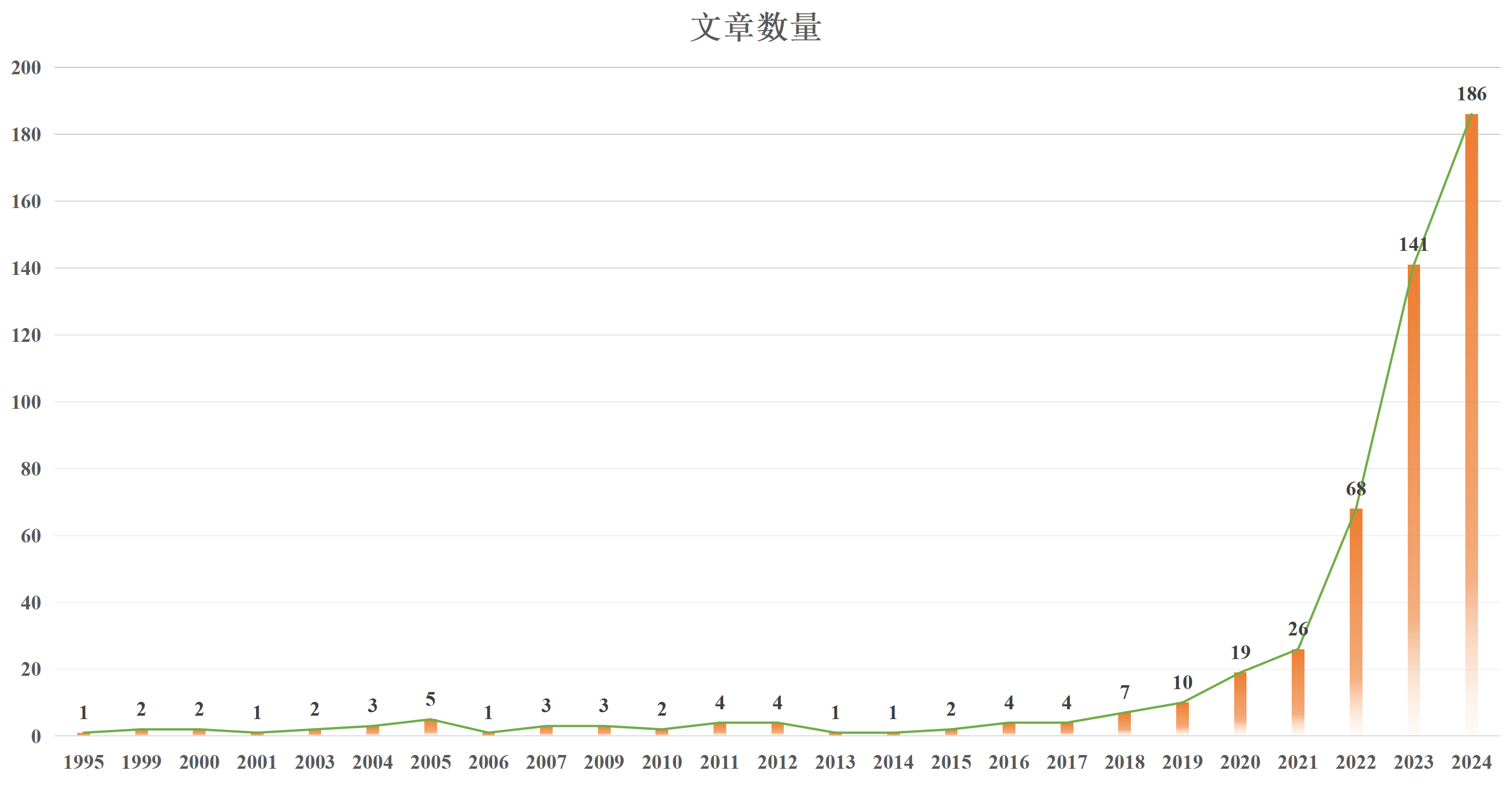
从1995年最早将强化学习用于车间调度问题后,在随后的几年里,强化学习一直不温不火,最主要的原因是一般的强化学习无法解决状态空间爆炸的问题,直到2018年深度强化学习开始进军调度领域,并在随后的几年里爆发式增长,在2024年,更是惊人地出现了至少186篇相关文章,相比于2023年,在等方面,成果更加丰富和显著。总体而言,2024年DRL在调度领域的研究呈现趋势。
获取更多资讯,赶快关注公众号《智能制造与智能调度》吧!
来了来了,还是来了!2024强化学习求解调度问题大盘点虽迟但到!
相关文献及文献原文均已整理打包,关注公众号,后台回复"2024",获取下载链接。
从1995年最早将强化学习用于车间调度问题后,在随后的几年里,强化学习一直不温不火,最主要的原因是一般的强化学习无法解决状态空间爆炸的问题,直到2018年深度强化学习开始进军调度领域,并在随后的几年里爆发式增长,在2024年,更是惊人地出现了至少186篇相关文章,相比于2023年,在综述、代码开源、多代理RL、算法融合、问题场景等方面,成果更加丰富和显著。总体而言,2024年DRL在调度领域的研究呈现复杂化、多目标化、跨学科化趋势。
综述类文章
4篇综述类文章,分别从DRL在分布式调度、与元启发式算法融合、生产调度、图神经网络结合作业车间调度等方面,进行了详细的阐述,可以从整体上快速了解这个方向当前已有的研究成果。
- [1] Z. J. K. Abadi, N. Mansouri, and M. M. Javidi, “Deep reinforcement learning-based scheduling in distributed systems: a critical review,” Knowledge and Information Systems, vol. 66, no. 10, pp. 5709-5782, Oct, 2024.
- [2] Y. P. Fu, Y. F. Wang, K. Z. Gao, and M. Huang, “Review on ensemble meta-heuristics and reinforcement learning for manufacturing scheduling problems,” Computers & Electrical Engineering, vol. 120, Dec, 2024.
- [3] V. Modrak, R. Sudhakarapandian, A. Balamurugan, and Z. Soltysova, “A Review on Reinforcement Learning in Production Scheduling: An Inferential Perspective,” Algorithms, vol. 17, no. 8, Aug, 2024.
- [4] I. G. Smit, J. N. Zhou, R. Reijnen, Y. X. Wub, J. Chen, C. Zhang, Z. Bukhsh, Y. Q. Zhang, and W. Nuijten, “Graph neural networks for job shop scheduling problems: A survey,” Computers & Operations Research, vol. 176, Apr, 2024.
开源代码解析
DRL常被诟病的点在于其复现性较弱,尤其是在复杂场景下,复现过程存在细节逻辑不透明、参数调优难度大等痛点,通过代码开源可以很好的提供逻辑参考和结果对比。
2024年有大约20篇文章提供了开源链接,其中部分仅给出了环境的建模代码。
- [1] Y. H. Chang, C. H. Liu, and S. D. You, “Scheduling for the Flexible Job-Shop Problem with a Dynamic Number of Machines Using Deep Reinforcement Learning,” Information, vol. 15, no. 2, Feb, 2024.(https://github.com/t110598027hung1/scheduling_problem/tree/refactor)
- [2] A. Debner, M. Krahn, and V. Hirvisalo, “Scheduling conditional task graphs with deep reinforcement learning,” Proceedings of Machine Learning Research. pp. 46-52, 2024.(https://github.com/Aalto-ESG/drl-scheduler-2024)
- [3] A. S. Ebrie, C. Paik, Y. Chung, and Y. J. Kim, “Deep contextual reinforcement learning algorithm for scalable power scheduling,” Applied Soft Computing, vol. 167, Dec, 2024.(https://github.com/awolseid/pymops)
- [4] A. Gosavi, and A. Gosavi, “A simulation-based digital twin for data-driven maintenance scheduling of risk-prone production lines via actor critics,” Flexible Services and Manufacturing Journal, 2024 Nov, 2024.(https://dataverse.harvard.edu/dataset.xhtml?persistentId=doi:10.7910/DVN/8WMIAQ、https://dataverse.harvard.edu/dataset.xhtml?persistentId=doi:10.7910/DVN/TBE30Y、https://dataverse.harvard.edu/dataset.xhtml?persistentId=doi:10.7910/DVN/LIMBUW)
- [5] D. Heik, F. Bahrpeyma, and D. Reichelt, “Study on the application of single-agent and multi-agent reinforcement learning to dynamic scheduling in manufacturing environments with growing complexity: Case study on the synthesis of an industrial IoT Test Bed,” Journal of Manufacturing Systems, vol. 77, pp. 525-557, Dec, 2024.(https://zenodo.org/records/10212298)
- [6] K. H. Ho, J. Y. Cheng, J. H. Wu, F. Chiang, Y. C. Chen, Y. Y. Wu, and I. C. Wu, “Residual Scheduling: A New Reinforcement Learning Approach to Solving Job Shop Scheduling Problem,” Ieee Access, vol. 12, pp. 14703-14718, 2024.(https://github.com/Raydiation/ResidualScheduling_IEEE_access)
- [7] G. Infantes, S. Roussel, P. Pereira, A. Jacquet, and E. Benazera, “Learning to Solve Job Shop Scheduling Under Uncertainty,” Lecture Notes in Computer Science. pp. 329-345, 2024.(https://github.com/jolibrain/wheatley/)
- [8] A. Khdoudi, T. Masrour, I. El Hassani, and C. El Mazgualdi, “A Deep-Reinforcement-Learning-Based Digital Twin for Manufacturing Process Optimization,” Systems, vol. 12, no. 2, pp. 38, 2024.(https://github.com/KHDOUDI/DT)
- [9] S. Lee, and J. Lee, “A Graph Attention Network Approach to Partitioned Scheduling in Real-Time Systems,” Ieee Embedded Systems Letters, vol. 16, no. 4, pp. 457-460, Dec, 2024.(https://github.com/SeungHoon00/Partitioned-Scheduling-with-GAT)
- [10] L. Li, S. Liang, Z. Zhu, C. Ding, H. Zha, and B. Wu, “Learning to optimize permutation flow shop scheduling via graph-based imitation learning.” pp. 20185-20193.(https://github.com/lokali/PFSS-IL)
- [11] Z. H. Luo, C. L. Jiang, L. Liu, X. L. Zheng, and H. D. Ma, “Flow-Shop Scheduling Problem With Batch Processing Machines via Deep Reinforcement Learning for Industrial Internet of Things,” Ieee Transactions on Emerging Topics in Computational Intelligence, 2024 May, 2024.(https://github.com/ZihuiLuo/FSSP-BPM/tree/master)
- [12] D. Rangel-Martinez, and L. A. Ricardez-Sandoval, “A recurrent reinforcement learning strategy for optimal scheduling of partially observable job-shop and flow-shop batch chemical plants under uncertainty,” Computers & Chemical Engineering, vol. 188, Sep, 2024.(https://git.uwaterloo.ca/ricardez_group/luis-ricardez-sandoval-drqn)
- [13] Z. J. Rui, X. Zhang, M. Z. Liu, L. Ling, X. Q. Wang, C. H. Liu, and M. Y. Sun, “Graph reinforcement learning for flexible job shop scheduling under industrial demand response: A production and energy nexus perspective,” Computers & Industrial Engineering, vol. 193, Jul, 2024.(https://github.com/ruizhangjie/FJS-IDR-GRL)
- [14] J. Si, X. Li, L. Gao, and P. Li, “An efficient and adaptive design of reinforcement learning environment to solve job shop scheduling problem with soft actor-critic algorithm,” International Journal of Production Research, pp. 1-16, 2024.(https://github.com/JonaSi754/JSP-RL-Environment)
- [15] C. P. Su, C. Zhang, C. Wang, W. H. Cen, G. Chen, and L. H. Xie, “Fast Pareto set approximation for multi-objective flexible job shop scheduling via parallel preference-conditioned graph reinforcement learning,” Swarm and Evolutionary Computation, vol. 88, Jul, 2024.(https://github.com/Chupeng24/PGRL)
- [16] R. Q. Wang, G. Wang, J. Sun, F. Deng, and J. Chen, “Flexible Job Shop Scheduling via Dual Attention Network-Based Reinforcement Learning,” Ieee Transactions on Neural Networks and Learning Systems, vol. 35, no. 3, pp. 3091-3102, Mar, 2024.(https://github.com/wrqccc/FJSP-DRL)
- [17] C. Zhang, Z. Cao, W. Song, Y. Wu, and J. Zhang, “DEEP REINFORCEMENT LEARNING GUIDED IM-PROVEMENT HEURISTIC FOR JOB SHOP SCHEDULING,” 2024.(https://github.com/zcaicaros/L2S)
- [18] J. X. Zhang, B. Guo, X. F. Ding, D. S. Hu, J. Tang, K. Du, C. Tang, and Y. M. Jiang, “An adaptive multi-objective multi-task scheduling method by hierarchical deep reinforcement learning,” Applied Soft Computing, vol. 154, Mar, 2024.(https://codeocean.com/capsule/5175542/tree/v1)
- [19] Y. N. Zhang, X. Li, Y. Teng, G. Q. Shen, and S. J. Bai, “A heuristic rule adaptive selection approach for multi-work package project scheduling problem,” Expert Systems with Applications, vol. 238, Mar, 2024.(https://github.com/dzzyn/A-heuristic-rule-adaptive-selection-appraoch-for-multi-work-package-project-scheduling-problem_data)
- [20] S. C. Zhao, H. Zhou, Y. J. Zhao, and D. Wang, “DQL-assisted competitive evolutionary algorithm for energy-aware robust flexible job shop scheduling under unexpected disruptions,” Swarm and Evolutionary Computation, vol. 91, Dec, 2024.(https://www.researchgate.net/publication/353938724_Rescheduling_dataset_new_job_insertion)
研究问题分类
经典调度问题及其扩展
- 柔性作业车间调度(FJSP):成为最热门的求解问题(如文献5、6、21、31、102、129、183),重点关注动态性(新作业插入、机器数量变化)和多目标优化(能耗、成本、时间)。
- 分布式调度:涉及分布式系统(文献1、8、13、23、146)、异构资源(文献9、148)和跨工厂协作(文献58)。
- 混合流水车间(HFS):结合批处理、AGV运输(文献3、68、103、153),强调能源效率(文献15、70)。
动态与不确定性处理
- 动态订单插入(文献55、103)
- 随机作业到达(文献41、117)
- 不确定处理时间(文献43、117)
- 鲁棒优化(文献52)
多目标优化
- 能效与低碳:绿色调度(文献70、105、155)、碳排放优化(文献9、112)。
- 多目标权衡:通过MOEA/D(文献70)、NSGA-III(文献104)与DRL结合,生成Pareto前沿。
应用行业分布
制造业
- 离散制造:汽车装配(文献42、53)、半导体生产(文献137、139)、航空航天(文献181)。
- 流程工业:化工(文献51、88)、炼钢连铸(文献95)、石化(文献51)。
物流与运输
- 集装箱码头AGV调度(文献25、161)
- 公交动态排班(文献10)
- 卡车装载优化(文献123)
新兴领域
- 医疗:门诊调度(文献156)。
- 卫星与通信:卫星任务规划(文献57)、量子网络(文献83)。
- 能源:电力调度(文献17)、低碳生产(文献9、105)。
研究趋势剖析
通过分析2024年相关文献,可以大致识别出一些当下的热点和潜在的研究方向,供大家参考。
复杂性与动态性增强
研究重点转向动态环境(随机事件、实时响应)和大规模问题(分布式、多工厂)。典型场景包括动态订单插入、AGV协同。
多目标与可持续性驱动
绿色调度(能耗、碳排放)成为核心方向,结合工业5.0需求(文献5、105)。
算法融合与架构创新
- DRL+传统优化:Memetic算法、遗传算法与DRL结合(文献5、23、159)。
- DRL+GNN:图神经网络建模调度问题拓扑(文献40、64、102)。
- 多智能体协作:MARL解决分布式资源竞争(文献24、85)。
工业4.0/5.0技术集成
通过与DRL结合,提升实时性与可扩展性。
- 数字孪生(文献47、49)
- 物联网(文献33)
- 边缘计算(文献83)
跨领域应用扩展
从传统制造业向医疗(文献156)、卫星(文献57)、量子网络(文献83)等新兴领域渗透。
文章汇总清单
- [1] Z. J. K. Abadi, N. Mansouri, and M. M. Javidi, “Deep reinforcement learning-based scheduling in distributed systems: a critical review,” Knowledge and Information Systems, vol. 66, no. 10, pp. 5709-5782, Oct, 2024.
- [2] O. A. Aderoba, K. A. Mpofu, O. T. Adenuga, and A. G. B. Nzengue, “Enhancing Dynamic Production Scheduling and Resource Allocation Through Adaptive Control Systems with Deep Reinforcement Learning,” Conference on Production Systems and Logistics. pp. 814-827, 2024.
- [3] J. C. Cai, and L. Wang, “A Shuffled Frog Leaping Algorithm with Q-Learning for Distributed Hybrid Flow Shop Scheduling Problem with Energy-Saving,” Journal of Artificial Intelligence and Soft Computing Research, vol. 14, no. 2, pp. 101-120, Mar, 2024.
- [4] J. Cailloux, N. Zufferey, and O. Gallay, “Graph coloring approaches for a production planning problem with makespan and setup penalties in a product-wheel context,” Discrete Applied Mathematics, vol. 355, pp. 200-222, Oct, 2024.
- [5] X. Chang, X. L. Jia, and J. H. Ren, “A reinforcement learning enhanced memetic algorithm for multi-objective flexible job shop scheduling toward Industry 5.0,” International Journal of Production Research, 2024 May, 2024.
- [6] Y. H. Chang, C. H. Liu, and S. D. You, “Scheduling for the Flexible Job-Shop Problem with a Dynamic Number of Machines Using Deep Reinforcement Learning,” Information, vol. 15, no. 2, Feb, 2024.
- [7] W. Chen, Z. Q. Zhang, D. B. Tang, C. C. Liu, Y. Gui, Q. W. Nie, and Z. Zhao, “Probing an LSTM-PPO-Based reinforcement learning algorithm to solve dynamic job shop scheduling problem,” Computers & Industrial Engineering, vol. 197, Nov, 2024.
- [8] X. Chen, Y. B. Li, K. P. Wang, L. Wang, J. Liu, J. Wang, and X. V. Wang, “Reinforcement learning for distributed hybrid flowshop scheduling problem with variable task splitting towards mass personalized manufacturing,” Journal of Manufacturing Systems, vol. 76, pp. 188-206, Oct, 2024.
- [9] Y. Chen, X. J. Liao, G. Z. Chen, and Y. J. Hou, “Dynamic Intelligent Scheduling in Low-Carbon Heterogeneous Distributed Flexible Job Shops with Job Insertions and Transfers,” Sensors, vol. 24, no. 7, Apr, 2024.
- [10] A. H. F. Chow, G. Y. Li, and C. S. Ying, “Adaptive scheduling of mixed bus services with flexible fleet size assignment under demand uncertainty,” Transportation Research Part C-Emerging Technologies, vol. 158, Feb, 2024.
- [11] A. Corrêa, A. Jesus, C. Silva, P. Peças, and S. Moniz, “Rainbow Versus Deep Q-Network: A Reinforcement Learning Comparison on The Flexible Job-Shop Problem.” pp. 870-875, 2024.
- [12] A. Debner, M. Krahn, and V. Hirvisalo, “Scheduling conditional task graphs with deep reinforcement learning,” Proceedings of Machine Learning Research. pp. 46-52, 2024.
- [13] Y. Z. Di, L. B. Deng, and L. L. Zhang, “A collaborative-learning multi-agent reinforcement learning method for distributed hybrid flow shop scheduling problem,” Swarm and Evolutionary Computation, vol. 91, Dec, 2024.
- [14] J. P. Ding, J. Xia, Y. T. Ye, Y. Ma, and M. S. Chen, “Knowledge-Based Effective Dispatch for Job Shop Scheduling,” Journal of Circuits Systems and Computers, 2024 Apr, 2024.
- [15] Y. Q. Dong, W. Z. Liao, and G. D. Xu, “Multi-Objective Optimization of Energy-Efficient Multi-Stage, Multi-Level Assembly Job Shop Scheduling,” Applied Sciences-Basel, vol. 14, no. 19, Oct, 2024.
- [16] T. Du, Y. Teng, S. Yu, and S. Ma, “GreNet based Industrial Line Resource Scheduling for Flexible Manufacturing.” pp. 1733-1738.
- [17] A. S. Ebrie, C. Paik, Y. Chung, and Y. J. Kim, “Deep contextual reinforcement learning algorithm for scalable power scheduling,” Applied Soft Computing, vol. 167, Dec, 2024.
- [18] I. Echeverria, M. Murua, and R. Santana, “Offline reinforcement learning for job-shop scheduling problems,” arXiv preprint arXiv:2410.15714, 2024.
- [19] Y. Feng, L. C. Zhang, and Ieee, “A Two-Stage Approach Based on Actor-Critic Network for Flexible Job Shop Scheduling Problem.” pp. 335-342, 2024.
- [20] Y. P. Fu, Y. F. Wang, K. Z. Gao, and M. Huang, “Review on ensemble meta-heuristics and reinforcement learning for manufacturing scheduling problems,” Computers & Electrical Engineering, vol. 120, Dec, 2024.
- [21] Y. G. Gao, S. Shi, G. J. Liu, and X. Q. Ding, “A Novel Reinforcement Learning Approach for Enhancing Flexible Job-Shop Scheduling with Dual Gated-Attention Network,” Lecture Notes in Computer Science. pp. 480-492, 2024.
- [22] G. D. Gebreyesus, G. T. Fellek, A. Farid, Y. Qiang, S. Fujimura, and O. Yoshie, “A Deep Reinforcement Learning Framework with Convolution Augmented Attention and Gate Mechanism for Job Shop Scheduling,” in Proceedings of the 2024 International Conference on Innovation in Artificial Intelligence, Tokyo, Japan, 2024, pp. 171–177.
- [23] K. F. Geng, L. Liu, and S. X. Wu, “A reinforcement learning based memetic algorithm for energy-efficient distributed two-stage flexible job shop scheduling problem,” Scientific Reports, vol. 14, no. 1, Dec, 2024.
- [24] S. Geng, Y. Guo, S. H. Huang, A. Sitahong, and Ieee, “Multi-agent Deep Reinforcement Learning Based Integrated Scheduling of Machines and AGVs in Discrete Manufacturing Workshop,” IEEE International Conference on Automatic Control and Intelligent Systems. pp. 59-64, 2024.
- [25] L. Gong, Z. J. Huang, X. Xiang, and X. Liu, “Real-time AGV scheduling optimisation method with deep reinforcement learning for energy-efficiency in the container terminal yard,” International Journal of Production Research, vol. 62, no. 21, pp. 7722-7742, Nov, 2024.
- [26] A. Gosavi, and A. Gosavi, “A simulation-based digital twin for data-driven maintenance scheduling of risk-prone production lines via actor critics,” Flexible Services and Manufacturing Journal, 2024 Nov, 2024.
- [27] F. Grumbach, A. Müller, and L. Vollenkemper, “Robust Human-Centered Assembly Line Scheduling with Reinforcement Learning,” Lecture Notes in Logistics. pp. 223-234, 2024.
- [28] W. B. Gu, S. Q. Liu, Z. Y. Guo, M. H. Yuan, and F. Q. Pei, “Dynamic scheduling mechanism for intelligent workshop with deep reinforcement learning method based on multi-agent system architecture,” Computers & Industrial Engineering, vol. 191, May, 2024.
- [29] Y. Gui, Z. Q. Zhang, D. B. Tang, H. H. Zhu, and Y. Zhang, “Collaborative dynamic scheduling in a self-organizing manufacturing system using multi-agent reinforcement learning,” Advanced Engineering Informatics, vol. 62, Oct, 2024.
- [30] H. S. Guo, Y. N. Ma, Z. Y. Ma, J. C. Chen, X. L. Zhang, Z. G. Cao, J. Zhang, and Y. J. Gong, “Deep Reinforcement Learning for Dynamic Algorithm Selection: A Proof-of-Principle Study on Differential Evolution,” Ieee Transactions on Systems Man Cybernetics-Systems, 2024 Apr, 2024.
- [31] J. He, and J. Li, “Deep Reinforcement Learning Based on Graph Neural Network for Flexible Job Shop Scheduling Problem with Lot Streaming,” Advanced Intelligent Computing Technology and Applications. pp. 85-95.
- [32] Z. L. He, M. Thürer, and W. L. Zhou, “The use of reinforcement learning for material flow control: An assessment by simulation,” International Journal of Production Economics, vol. 274, Aug, 2024.
- [33] D. Heik, F. Bahrpeyma, and D. Reichelt, “Study on the application of single-agent and multi-agent reinforcement learning to dynamic scheduling in manufacturing environments with growing complexity: Case study on the synthesis of an industrial IoT Test Bed,” Journal of Manufacturing Systems, vol. 77, pp. 525-557, Dec, 2024.
- [34] K. Hengel, A. Wagner, and M. Ruskowski, “A Dynamic Multi-objective Scheduling Approach for Gradient-Based Reinforcement Learning.” pp. 49-54, 2024.
- [35] K. H. Ho, J. Y. Cheng, J. H. Wu, F. Chiang, Y. C. Chen, Y. Y. Wu, and I. C. Wu, “Residual Scheduling: A New Reinforcement Learning Approach to Solving Job Shop Scheduling Problem,” Ieee Access, vol. 12, pp. 14703-14718, 2024.
- [36] W. Hou, and S. Zhang, “Assembly line balancing and optimal scheduling for flexible manufacturing workshop,” Journal of Mechanical Science and Technology, 2024 Jun, 2024.
- [37] Y. S. Hou, H. F. Wang, and X. L. Huang, “A Q-learning-based multi-objective evolutionary algorithm for integrated green production and distribution scheduling problems,” Engineering Applications of Artificial Intelligence, vol. 127, Jan, 2024.
- [38] Z. Hou, L. Zhang, Y. Wang, and Y. Hu, “Deep Reinforcement Learning for Dynamic Flexible Job-Shop Scheduling with Automated Guided Vehicles,” Proceedings of Industrial Engineering and Management. pp. 89-99.
- [39] Y. F. Hu, L. P. Zhang, Z. K. Zhang, Z. X. Li, and Q. H. Tang, “Matheuristic and learning-oriented multi-objective artificial bee colony algorithm for energy-aware flexible assembly job shop scheduling problem,” Engineering Applications of Artificial Intelligence, vol. 133, Jul, 2024.
- [40] D. L. Huang, H. Zhao, L. J. Zhang, and K. P. Chen, “Learning to Dispatch for Flexible Job Shop Scheduling Based on Deep Reinforcement Learning via Graph Gated Channel Transformation,” Ieee Access, vol. 12, pp. 50935-50948, 2024.
- [41] J. P. Huang, L. Gao, and X. Y. Li, “A Hierarchical Multi-Action Deep Reinforcement Learning Method for Dynamic Distributed Job-Shop Scheduling Problem With Job Arrivals,” Ieee Transactions on Automation Science and Engineering, 2024 Apr, 2024.
- [42] Y. Z. Huang, G. C. Fu, B. Y. Sheng, Y. K. Lu, J. P. Yu, and X. Y. Yin, “Deep reinforcement learning for solving car resequencing with selectivity banks in automotive assembly shops,” International Journal of Production Research, 2024 Sep, 2024.
- [43] G. Infantes, S. Roussel, P. Pereira, A. Jacquet, and E. Benazera, “Learning to Solve Job Shop Scheduling Under Uncertainty,” Lecture Notes in Computer Science. pp. 329-345, 2024.
- [44] M. H. Jabeur, S. Mahjoub, C. Toublanc, and V. Cariou, “Optimizing integrated lot sizing and production scheduling in flexible flow line systems with energy scheme: A two level approach based on reinforcement learning,” Computers & Industrial Engineering, vol. 190, Apr, 2024.
- [45] X. Jing, X. F. Yao, M. Liu, and J. J. Zhou, “Multi-agent reinforcement learning based on graph convolutional network for flexible job shop scheduling,” Journal of Intelligent Manufacturing, vol. 35, no. 1, pp. 75-93, Jan, 2024.
- [46] M. Kemmerling, A. Abdelrazeq, and R. H. Schmitt, “Solving Job Shop Problems with Neural Monte Carlo Tree Search.” pp. 149-158.
- [47] A. Khdoudi, T. Masrour, I. El Hassani, and C. El Mazgualdi, “A Deep-Reinforcement-Learning-Based Digital Twin for Manufacturing Process Optimization,” Systems, vol. 12, no. 2, pp. 38, 2024.
- [48] G. P. Koslovski, K. Pereira, and P. R. Albuquerque, “DAG-based workflows scheduling using Actor-Critic Deep Reinforcement Learning,” Future Generation Computer Systems-the International Journal of Escience, vol. 150, pp. 354-363, Jan, 2024.
- [49] D. Krenczyk, “Deep Reinforcement Learning and Discrete Simulation-Based Digital Twin for Cyber-Physical Production Systems,” Applied Sciences-Basel, vol. 14, no. 12, Jun, 2024.
- [50] S. Lassoued, and A. Schwung, “Introducing PetriRL: An innovative framework for JSSP resolution integrating Petri nets and event-based reinforcement learning,” Journal of Manufacturing Systems, vol. 74, pp. 690-702, Jun, 2024.
- [51] C. Y. Lee, C. Y. Ho, Y. H. Hung, and Y. W. Deng, “Multi-objective genetic algorithm embedded with reinforcement learning for petrochemical melt-flow-index production scheduling,” Applied Soft Computing, vol. 159, Jul, 2024.
- [52] C. Y. Lee, Y. T. Huang, and P. J. Chen, “Robust-optimization-guiding deep reinforcement learning for chemical material production scheduling,” Computers & Chemical Engineering, vol. 187, Aug, 2024.
- [53] S. Lee, J. Kim, G. Wi, Y. Won, Y. Eun, and K. J. Park, “Deep Reinforcement Learning-Driven Scheduling in Multijob Serial Lines: A Case Study in Automotive Parts Assembly,” Ieee Transactions on Industrial Informatics, vol. 20, no. 2, pp. 2932-2943, Feb, 2024.
- [54] S. Lee, and J. Lee, “A Graph Attention Network Approach to Partitioned Scheduling in Real-Time Systems,” Ieee Embedded Systems Letters, vol. 16, no. 4, pp. 457-460, Dec, 2024.
- [55] K. Lei, P. Guo, Y. Wang, J. Zhang, X. Y. Meng, and L. M. Qian, “Large-Scale Dynamic Scheduling for Flexible Job-Shop With Random Arrivals of New Jobs by Hierarchical Reinforcement Learning,” Ieee Transactions on Industrial Informatics, vol. 20, no. 1, pp. 1007-1018, Jan, 2024.
- [56] Y. Lei, Q. W. Deng, M. Q. Liao, and S. C. Gao, “Deep reinforcement learning for dynamic distributed job shop scheduling problem with transfers,” Expert Systems with Applications, vol. 251, Oct, 2024.
- [57] G. H. Li, X. F. Li, J. Li, J. Chen, and X. Shen, “PTMB: An online satellite task scheduling framework based on pre-trained Markov decision process for multi-task scenario,” Knowledge-Based Systems, vol. 284, Jan, 2024.
- [58] H. Li, H. Zhang, Z. He, Y. Jia, B. Jiang, X. Huang, and D. Ge, “Solving Integrated Process Planning and Scheduling Problem via Graph Neural Network Based Deep Reinforcement Learning,” Arxiv, Sep 02, 2024.
- [59] L. Li, S. Liang, Z. Zhu, C. Ding, H. Zha, and B. Wu, “Learning to optimize permutation flow shop scheduling via graph-based imitation learning.” pp. 20185-20193.
- [60] L. Li, and L. Lin, “Scheduling Distributed Flexible Assembly Lines using Safe Reinforcement Learning with Soft Shielding.” pp. 646-652.
- [61] P. Liang, P. F. Xiao, Z. Y. Li, M. Luo, and C. Y. Zhang, “A novel deep reinforcement learning-based algorithm for multi-objective energy-efficient flow-shop scheduling,” Iet Collaborative Intelligent Manufacturing, vol. 6, no. 4, Dec, 2024.
- [62] C. C. Lin, Y. C. Peng, Y. S. Chang, and C. H. Chang, “Reentrant hybrid flow shop scheduling with stockers in automated material handling systems using deep reinforcement learning,” Computers & Industrial Engineering, vol. 189, Mar, 2024.
- [63] A. Liu, D. Yue, J. Chen, and H. Chen, “DEEP LEARNING FOR INTELLIGENT PRODUCTION SCHEDULING OPTIMIZATION,” International Journal of Simulation Modelling (IJSIMM), vol. 23, no. 1, 2024.
- [64] C. L. Liu, C. J. Tseng, and P. H. Weng, “Dynamic Job-Shop Scheduling via Graph Attention Networks and Deep Reinforcement Learning,” Ieee Transactions on Industrial Informatics, vol. 20, no. 6, pp. 8662-8672, Jun, 2024.
- [65] H. Liu, S. Li, F. Sun, W. Fan, W. H. Ip, and K. L. Yung, “Adaptive Dynamic Programming with Reinforcement Learning on Optimization of Flight Departure Scheduling,” Aerospace, vol. 11, no. 9, Sep, 2024.
- [66] S. R. Liu, W. Y. Wang, S. P. Zhong, Y. Peng, Q. Tian, R. Q. Li, X. B. Sun, and Y. Yang, “A graph-based approach for integrating massive data in container terminals with application to scheduling problem,” International Journal of Production Research, 2024 Jan, 2024.
- [67] Z. Y. Liu, H. Y. Mao, G. Sa, H. Liu, and J. R. Tan, “Dynamic job-shop scheduling using graph reinforcement learning with auxiliary strategy,” Journal of Manufacturing Systems, vol. 73, pp. 1-18, Apr, 2024.
- [68] B. X. Lu, K. Z. Gao, Y. X. Ren, D. C. Li, and A. Slowik, “Combining meta-heuristics and Q-learning for scheduling lot-streaming hybrid flow shops with consistent sublots,” Swarm and Evolutionary Computation, vol. 91, Dec, 2024.
- [69] S. J. Lu, Y. Q. Wang, M. Kong, W. Z. Wang, W. M. Tan, and Y. X. Song, “A Double Deep Q-Network framework for a flexible job shop scheduling problem with dynamic job arrivals and urgent job insertions,” Engineering Applications of Artificial Intelligence, vol. 133, Jul, 2024.
- [70] Y. X. Lu, Y. P. Yuan, A. Sitahong, Y. S. Chao, and Y. X. Wang, “An Optimization Method for Green Permutation Flow Shop Scheduling Based on Deep Reinforcement Learning and MOEA/D,” Machines, vol. 12, no. 10, Oct, 2024.
- [71] J. L. Luo, S. J. Yi, Z. X. Lin, H. B. Zhang, and J. Z. Zhou, “Petri-net-based deep reinforcement learning for real-time scheduling of automated manufacturing systems,” Journal of Manufacturing Systems, vol. 74, pp. 995-1008, Jun, 2024.
- [72] Z. H. Luo, C. L. Jiang, L. Liu, X. L. Zheng, and H. D. Ma, “Flow-Shop Scheduling Problem With Batch Processing Machines via Deep Reinforcement Learning for Industrial Internet of Things,” Ieee Transactions on Emerging Topics in Computational Intelligence, 2024 May, 2024.
- [73] B. Lv, J. J. Jiang, L. K. Wu, and H. K. Zhao, “Team formation in large organizations: A deep reinforcement learning approach,” Decision Support Systems, vol. 187, Dec, 2024.
- [74] Q. H. Lv, J. Chen, P. Chen, Q. F. Xun, and L. Gao, “Flexible Job-shop Scheduling Problem with parallel operations using Reinforcement Learning: An approach based on Heterogeneous Graph Attention Networks,” Advances in Production Engineering & Management, vol. 19, no. 2, Jun, 2024.
- [75] N. Ma, H. Q. Li, and H. L. Liu, “State-Space Compression for Efficient Policy Learning in Crude Oil Scheduling,” Mathematics, vol. 12, no. 3, Feb, 2024.
- [76] V. Modrak, R. Sudhakarapandian, A. Balamurugan, and Z. Soltysova, “A Review on Reinforcement Learning in Production Scheduling: An Inferential Perspective,” Algorithms, vol. 17, no. 8, Aug, 2024.
- [77] M. Monaci, V. Agasucci, and G. Grani, “An actor-critic algorithm with policy gradients to solve the job shop scheduling problem using deep double recurrent agents,” European Journal of Operational Research, vol. 312, no. 3, pp. 910-926, Feb, 2024.
- [78] S. Moon, S. Lee, and K.-J. Park, “Learning-enabled Flexible Job-shop Scheduling for Scalable Smart Manufacturing,” Arxiv, Feb 14, 2024.
- [79] S. Nam, Y.-i. Cho, and J. H. Woo, “Simulation-based deep reinforcement learning for multi-objective identical parallel machine scheduling problem,” International Journal of Naval Architecture and Ocean Engineering, vol. 16, pp. 100629, 2024/01/01/, 2024.
- [80] S. H. Oh, Y. I. Choi, S. W. Han, and J. H. Woo, “Graph-To-Sequence Approach for Job Shop Scheduling Problem,” IFIP Advances in Information and Communication Technology. pp. 435-447, 2024.
- [81] S. K. Panda, Y. S. Xiang, and R. Q. Liu, “Dynamic resource matching in manufacturing using deep reinforcement learning,” European Journal of Operational Research, vol. 318, no. 2, pp. 408-423, Oct, 2024.
- [82] P. D. Paraschos, A. C. Gasteratos, and D. E. Koulouriotis, “Deep learning model for optimizing control and planning in stochastic manufacturing environments,” Expert Systems with Applications, vol. 257, Dec, 2024.
- [83] S. Park, G. S. Kim, Z. Han, and J. Kim, “Quantum Multi-Agent Reinforcement Learning is All You Need: Coordinated Global Access in Integrated TN/NTN Cube-Satellite Networks,” Ieee Communications Magazine, vol. 62, no. 10, pp. 86-92, Oct, 2024.
- [84] S. M. Peng, G. Xiong, J. Yang, Z. Shen, T. S. Tamir, Z. K. Tao, Y. J. Han, and F. Y. Wang, “Multi-Agent Reinforcement Learning for Extended Flexible Job Shop Scheduling,” Machines, vol. 12, no. 1, Jan, 2024.
- [85] Y. Pu, F. Li, and S. Rahimifard, “Multi-Agent Reinforcement Learning for Job Shop Scheduling in Dynamic Environments,” Sustainability, vol. 16, no. 8, Apr, 2024.
- [86] Z. J. Qin, and Y. Q. Lu, “Knowledge graph-enhanced multi-agent reinforcement learning for adaptive scheduling in smart manufacturing,” Journal of Intelligent Manufacturing, 2024 Oct, 2024.
- [87] J. H. Qiu, J. J. Liu, Z. T. Li, and X. J. Lai, “A multi-level action coupling reinforcement learning approach for online two-stage flexible assembly flow shop scheduling,” Journal of Manufacturing Systems, vol. 76, pp. 370-370, Oct, 2024.
- [88] D. Rangel-Martinez, and L. A. Ricardez-Sandoval, “A recurrent reinforcement learning strategy for optimal scheduling of partially observable job-shop and flow-shop batch chemical plants under uncertainty,” Computers & Chemical Engineering, vol. 188, Sep, 2024.
- [89] F. J. Ren, and H. B. Liu, “Dynamic scheduling for flexible job shop based on MachineRank algorithm and reinforcement learning,” Scientific Reports, vol. 14, no. 1, Nov, 2024.
- [90] Z. J. Rui, X. Zhang, M. Z. Liu, L. Ling, X. Q. Wang, C. H. Liu, and M. Y. Sun, “Graph reinforcement learning for flexible job shop scheduling under industrial demand response: A production and energy nexus perspective,” Computers & Industrial Engineering, vol. 193, Jul, 2024.
- [91] M. L. Ruiz-Rodríguez, S. Kubler, J. Robert, and Y. Le Traon, “Dynamic maintenance scheduling approach under uncertainty: Comparison between reinforcement learning, genetic algorithm simheuristic, dispatching rules,” Expert Systems with Applications, vol. 248, Aug, 2024.
- [92] C. Shao, Z. Yu, H. Ding, and G. Cao, “A Deep Reinforcement Learning Method for Flexible Job-Shop Scheduling Problem.” pp. 184-188.
- [93] X. C. Shen, C. K. Tham, and Ieee, “Multi-Agent Deep Reinforcement Learning based Multi-Objective Resource Optimization in a Distributed Manufacturing System,” IEEE Vehicular Technology Conference VTC, 2024.
- [94] J. F. Shi, W. Liu, and J. Yang, “An Enhanced Multi-Objective Evolutionary Algorithm with Reinforcement Learning for Energy-Efficient Scheduling in the Flexible Job Shop,” Processes, vol. 12, no. 9, Sep, 2024.
- [95] W. J. Shin, S. W. Lee, J. H. Lee, M. H. Song, and H. J. Kim, “Scheduling of steelmaking-continuous casting process by integrating deep neural networks with mixed integer programming,” International Journal of Production Research, 2024 Dec, 2024.
- [96] J. H. Si, X. Y. Li, L. Gao, and P. G. Li, “An efficient and adaptive design of reinforcement learning environment to solve job shop scheduling problem with soft actor-critic algorithm,” International Journal of Production Research, 2024 Mar, 2024.
- [97] R. Sigar, A. Kishor, P. K. Singh, and J. Dhar, “Optimizing Job Scheduling using Deep Reinforcement Learning.” pp. 1-6.
- [98] I. G. Smit, J. N. Zhou, R. Reijnen, Y. X. Wub, J. Chen, C. Zhang, Z. Bukhsh, Y. Q. Zhang, and W. Nuijten, “Graph neural networks for job shop scheduling problems: A survey,” Computers & Operations Research, vol. 176, Apr, 2024.
- [99] C. P. Su, C. Zhang, C. Wang, W. H. Cen, G. Chen, and L. H. Xie, “Fast Pareto set approximation for multi-objective flexible job shop scheduling via parallel preference-conditioned graph reinforcement learning,” Swarm and Evolutionary Computation, vol. 88, Jul, 2024.
- [100] D. Y. Sun, J. Q. Wen, J. F. Wang, X. N. Yang, and Y. G. Hu, “A Path Planning Method Based on Deep Reinforcement Learning with Improved Prioritized Experience Replay for Human-Robot Collaboration,” Lecture Notes in Computer Science. pp. 196-206, 2024.
- [101] L. Sun, W. M. Shi, C. Xuan, and Y. C. Zhang, “Research on Scheduling Algorithm of Knitting Production Workshop Based on Deep Reinforcement Learning,” Machines, vol. 12, no. 8, Aug, 2024.
- [102] H. Tang, and J. Dong, “Solving Flexible Job-Shop Scheduling Problem with Heterogeneous Graph Neural Network Based on Relation and Deep Reinforcement Learning,” Machines, vol. 12, no. 8, pp. 584, 2024.
- [103] H. T. Tang, J. W. Huang, C. H. Ren, Y. P. Shao, and J. S. Lu, “Integrated scheduling of multi-objective lot-streaming hybrid flowshop with AGV based on deep reinforcement learning,” International Journal of Production Research, 2024 Jul, 2024.
- [104] H. T. Tang, Y. Xiao, W. Zhang, D. M. Lei, J. Wang, and T. Xu, “A DQL-NSGA-III algorithm for solving the flexible job shop dynamic scheduling problem,” Expert Systems with Applications, vol. 237, Mar, 2024.
- [105] Y. M. Tang, L. H. Shen, and S. G. Han, “Low-Carbon Flexible Job Shop Scheduling Problem Based on Deep Reinforcement Learning,” Sustainability, vol. 16, no. 11, Jun, 2024.
- [106] L. J. Wan, X. Y. Cui, H. X. Zhao, L. Fu, and C. Y. Li, “A novel method for solving dynamic flexible job-shop scheduling problem via DIFFormer and deep reinforcement learning,” Computers & Industrial Engineering, vol. 198, Dec, 2024.
- [107] G. S. Wang, Y. Y. Zou, S. Li, and Ieee, “Multi-objective Dynamic AGV Scheduling Method Based on Deep Reinforcement Learning,” Asian Control Conference ASCC. pp. 1450-1455, 2024.
- [108] J. C. Wang, G. P. Xi, X. W. Guo, S. X. Liu, S. J. Qin, and H. Han, “Reinforcement learning for Hybrid Disassembly Line Balancing Problems,” Neurocomputing, vol. 569, Feb, 2024.
- [109] R. Q. Wang, G. Wang, J. Sun, F. Deng, and J. Chen, “Flexible Job Shop Scheduling via Dual Attention Network-Based Reinforcement Learning,” Ieee Transactions on Neural Networks and Learning Systems, vol. 35, no. 3, pp. 3091-3102, Mar, 2024.
- [110] T. Wang, Y. H. Zhang, and X. F. Hu, “A Q-learning based hyper-heuristic scheduling algorithm with multi-rule selection for sub-assembly in shipbuilding,” Computers & Industrial Engineering, vol. 197, Nov, 2024.
- [111] X. Wang, P. S. Zhong, M. Liu, C. Zhang, and S. H. Yang, “A novel method-based reinforcement learning with deep temporal difference network for flexible double shop scheduling problem,” Scientific Reports, vol. 14, no. 1, Apr, 2024.
- [112] Z. X. Wang, M. W. He, J. Wu, H. N. Chen, and Y. Cao, “An improved MOEA/D for low-carbon many-objective flexible job shop scheduling problem,” Computers & Industrial Engineering, vol. 188, Feb, 2024.
- [113] X. Y. Wen, H. B. Zhang, H. Li, H. Q. Wang, W. Y. Ming, Y. Y. Zhang, and L. K. Zhang, “Fusion Q-Learning Algorithm for Open Shop Scheduling Problem with AGVs,” Mathematics, vol. 12, no. 3, Feb, 2024.
- [114] X. Y. Wen, X. Y. Zhang, H. W. Xing, G. Y. Ye, H. Li, Y. Y. Zhang, and H. Q. Wang, “An improved genetic algorithm based on reinforcement learning for aircraft assembly scheduling problem,” Computers & Industrial Engineering, vol. 193, Jul, 2024.
- [115] V. W. H. Wong, S. H. Kim, J. Park, J. Park, and K. H. Law, “Generating Dispatching Rules for the Interrupting Swap-Allowed Blocking Job Shop Problem Using Graph Neural Network and Reinforcement Learning,” Journal of Manufacturing Science and Engineering-Transactions of the Asme, vol. 146, no. 1, Jan, 2024.
- [116] A. D. Workneh, M. El Mouhtadi, and A. E. Alaoui, “Deep reinforcement learning for adaptive flexible job shop scheduling: coping with variability and uncertainty,” Smart Science, 2024 May, 2024.
- [117] X. Wu, X. Yan, D. Guan, and M. Wei, “A deep reinforcement learning model for dynamic job-shop scheduling problem with uncertain processing time,” Engineering Applications of Artificial Intelligence, vol. 131, pp. 107790, 2024/05/01/, 2024.
- [118] Y. T. Wu, L. Wang, R. Li, and J. F. Chen, “A reinforcement learning-driven adaptive decomposition algorithm for multi-objective hybrid seru system scheduling considering worker transfer,” Swarm and Evolutionary Computation, vol. 88, Jul, 2024.
- [119] Z. Y. Wu, Y. Wang, and Ieee, “Process Industry Scheduling Based on Graph Neural Network and Reinforcement Learning,” Youth Academic Annual Conference of Chinese Association of Automation. pp. 1598-1603, 2024.
- [120] F. H. Xu, and J. Q. Li, “A Multi-action Reinforcement Learning Framework via Pointer Graph Neural Network for Flexible Job-Shop Scheduling Problems with Resource Transfer,” Lecture Notes in Computer Science. pp. 179-190, 2024.
- [121] N. J. Xu, Z. S. Shi, S. H. Yin, and Z. R. Xiang, “A hyper-heuristic with deep Q-network for the multi-objective unmanned surface vehicles scheduling problem,” Neurocomputing, vol. 596, Sep, 2024.
- [122] S. Xu, Y. W. Li, and Q. Y. Li, “A Deep Reinforcement Learning Method Based on a Transformer Model for the Flexible Job Shop Scheduling Problem,” Electronics, vol. 13, no. 18, Sep, 2024.
- [123] Z. Z. Xu, J. L. Wang, M. Yuan, Y. Z. Yuan, B. Y. Chen, Q. D. Zhang, C. L. Chen, and X. P. Guan, “Joint optimization of steel plate shuffling and truck loading sequencing based on deep reinforcement learning,” Advanced Engineering Informatics, vol. 60, Apr, 2024.
- [124] D. Yang, X. T. Shu, Z. Yu, G. T. Lu, S. L. Ji, J. B. Wang, and K. D. He, “Dynamic flexible job shop scheduling based on deep reinforcement learning,” Proceedings of the Institution of Mechanical Engineers Part B-Journal of Engineering Manufacture, 2024 Sep, 2024.
- [125] S. L. Yang, J. Y. Wang, and Z. G. Xu, “Learning to schedule dynamic distributed reconfigurable workshops using expected deep Q-network,” Advanced Engineering Informatics, vol. 59, Jan, 2024.
- [126] L. W. Yao, Q. C. Chen, L. H. Gong, and K. Li, “Multi-NPDQ: A Multi-agent Approach Through Deep Reinforcement Learning for Operation Scheduling,” Lecture Notes in Computer Science. pp. 467-479, 2024.
- [127] Y. J. Yao, X. Y. Li, and L. Gao, “A DQN-based memetic algorithm for energy-efficient job shop scheduling problem with integrated limited AGVs,” Swarm and Evolutionary Computation, vol. 87, Jun, 2024.
- [128] K. Yu-Cheng, and T. Harada, “Optimizing Job Shop Scheduling with Deep Q-Network for Robust Performance.” pp. 1-7.
- [129] E. Yuan, L. Wang, S. Cheng, S. Song, W. Fan, and Y. Li, “Solving flexible job shop scheduling problems via deep reinforcement learning,” Expert Systems with Applications, vol. 245, pp. 123019, 2024/07/01/, 2024.
- [130] P. Yue, Y. C. Jin, Q. Shi, X. W. Dai, D. L. Cui, and Ieee, “A PSO-Assisted Reinforcement Learning Algorithm for Job Shop Scheduling.” pp. 338-343, 2024.
- [131] M. Zampella, U. Otamendi, X. Belaunzaran, A. Artetxe, I. G. Olaizola, G. Longo, and B. Sierra, “Exploring Multi-Agent Reinforcement Learning for Unrelated Parallel Machine Scheduling,” arXiv preprint arXiv:2411.07634, 2024.
- [132] C. Zhang, Z. Cao, W. Song, Y. Wu, and J. Zhang, “DEEP REINFORCEMENT LEARNING GUIDED IM-PROVEMENT HEURISTIC FOR JOB SHOP SCHEDULING,” 2024.
- [133] F. Y. Zhang, R. Li, and W. Y. Gong, “Deep reinforcement learning-based memetic algorithm for energy-aware flexible job shop scheduling with multi-AGV,” Computers & Industrial Engineering, vol. 189, Mar, 2024.
- [134] H. Zhang, W. H. Wang, S. S. Zhang, Y. J. Zhang, J. T. Zhou, Z. Wang, B. Huang, and R. Huang, “A novel method based on deep reinforcement learning for machining process route planning,” Robotics and Computer-Integrated Manufacturing, vol. 86, Apr, 2024.
- [135] J. X. Zhang, B. Guo, X. F. Ding, D. S. Hu, J. Tang, K. Du, C. Tang, and Y. M. Jiang, “An adaptive multi-objective multi-task scheduling method by hierarchical deep reinforcement learning,” Applied Soft Computing, vol. 154, Mar, 2024.
- [136] K. Zhang, Y. W. Zhang, H. R. Gao, and Z. M. Bi, “Elite Gene Transfer Learning Heuristic Algorithm in Scheduling Aircraft Assembly,” Ieee Transactions on Industrial Informatics, vol. 20, no. 11, pp. 13373-13383, Nov, 2024.
- [137] L. Zhang, Y. Lin, C. P. Xu, and M. Liu, “A new EDA algorithm combined with Q-learning for semiconductor final testing scheduling problem,” Computers & Industrial Engineering, vol. 193, Jul, 2024.
- [138] L. X. Zhang, Y. Yan, C. Yang, and Y. G. Hu, “Dynamic flexible job-shop scheduling by multi-agent reinforcement learning with reward-shaping,” Advanced Engineering Informatics, vol. 62, Oct, 2024.
- [139] P. Zhang, M. Y. Jin, M. Wang, J. Zhang, J. J. He, and P. Zheng, “A clustering-aided multi-agent deep reinforcement learning for multi-objective parallel batch processing machines scheduling in semiconductor manufacturing,” Measurement & Control, 2024 Aug, 2024.
- [140] P. Zhang, M. Wang, G. Q. Zhang, P. Zheng, M. Y. Jin, and J. Zhang, “Multi-robot multi-station welding flow shop closed-loop rescheduling with deep reinforcement learning and improved artificial bee colony algorithm,” Computers & Industrial Engineering, vol. 193, Jul, 2024.
- [141] W. Q. Zhang, F. Zhao, Y. Li, C. Du, X. B. Feng, and X. S. Mei, “A novel collaborative agent reinforcement learning framework based on an attention mechanism and disjunctive graph embedding for flexible job shop scheduling problem,” Journal of Manufacturing Systems, vol. 74, pp. 329-345, Jun, 2024.
- [142] W. Q. Zhang, F. Zhao, C. T. Yang, C. Du, X. B. Feng, Y. K. Zhang, Z. X. Peng, and X. S. Mei, “A novel Soft Actor-Critic framework with disjunctive graph embedding and autoencoder mechanism for Job Shop Scheduling Problems,” Journal of Manufacturing Systems, vol. 76, pp. 614-626, Oct, 2024.
- [143] Y. N. Zhang, X. Li, Y. Teng, G. Q. Shen, and S. J. Bai, “A heuristic rule adaptive selection approach for multi-work package project scheduling problem,” Expert Systems with Applications, vol. 238, Mar, 2024.
- [144] Z. Y. Zhang, Z. S. Shao, W. S. Shao, J. R. Chen, and D. C. Pi, “MRLM: A meta-reinforcement learning-based metaheuristic for hybrid flow-shop scheduling problem with learning and forgetting effects,” Swarm and Evolutionary Computation, vol. 85, Mar, 2024.
- [145] C. Zhao, and N. Deng, “An actor-critic framework based on deep reinforcement learning for addressing flexible job shop scheduling problems,” Mathematical Biosciences and Engineering, vol. 21, no. 1, pp. 1445-1471, 2024.
- [146] F. Q. Zhao, and M. J. Li, “Reinforcement Learning-Based Estimation of Distribution Algorithm for Energy-Efficient Distributed Heterogeneous Flexible Job Shop Scheduling Problem,” Lecture Notes in Computer Science. pp. 183-195, 2024.
- [147] F. Q. Zhao, Y. B. Liu, T. P. Xu, and Jonrinaldi, “A reinforcement learning hyper-heuristic algorithm for the distributed flowshops scheduling problem under consideration of emergency order insertion,” Applied Soft Computing, vol. 167, Dec, 2024.
- [148] F. Q. Zhao, F. M. Yin, L. Wang, and Y. Yu, “A Co-Evolution Algorithm With Dueling Reinforcement Learning Mechanism for the Energy-Aware Distributed Heterogeneous Flexible Flow-Shop Scheduling Problem,” Ieee Transactions on Systems Man Cybernetics-Systems, 2024 Dec, 2024.
- [149] F. Q. Zhao, C. X. Zhuang, L. Wang, and C. X. Dong, “An Iterative Greedy Algorithm With Q-Learning Mechanism for the Multiobjective Distributed No-Idle Permutation Flowshop Scheduling,” Ieee Transactions on Systems Man Cybernetics-Systems, vol. 54, no. 5, pp. 3207-3219, May, 2024.
- [150] L. L. Zhao, J. X. Fan, C. J. Zhang, W. M. Shen, and J. Zhuang, “A DRL-Based Reactive Scheduling Policy for Flexible Job Shops With Random Job Arrivals,” Ieee Transactions on Automation Science and Engineering, vol. 21, no. 3, pp. 2912-2923, Jul, 2024.
- [151] S. C. Zhao, H. Zhou, Y. J. Zhao, and D. Wang, “DQL-assisted competitive evolutionary algorithm for energy-aware robust flexible job shop scheduling under unexpected disruptions,” Swarm and Evolutionary Computation, vol. 91, Dec, 2024.
- [152] Y. Zhao, Y. Chen, J. Wu, and C. Guo, “Dual Dynamic Attention Network for Flexible Job Scheduling with Reinforcement Learning.” pp. 1-8.
- [153] Y. Zhao, X. Luo, and Y. Zhang, “The application of heterogeneous graph neural network and deep reinforcement learning in hybrid flow shop scheduling problem,” Computers & Industrial Engineering, vol. 187, pp. 109802, 2024/01/01/, 2024.
- [154] Q. Y. Zhu, K. Z. Gao, W. Z. Huang, Z. F. Ma, and A. Slowik, “Q-Learning-Assisted Meta-Heuristics for Scheduling Distributed Hybrid Flow Shop Problems,” Cmc-Computers Materials & Continua, vol. 80, no. 3, pp. 3573-3589, 2024.
- [155] M. Z. Zhuang, W. Zhang, H. T. Tang, X. Y. Li, and K. P. Wang, “A multi-objective genetic algorithm based on two-stage reinforcement learning for green flexible shop scheduling problem considering machine speed,” Expert Systems with Applications, vol. 258, Dec, 2024.
- [156] J. N. Zuo, Y. Jin, and W. B. Liu, “Outpatient scheduling problem in smart hospital with two-agent deep reinforcement learning algorithm,” Discover Computing, vol. 27, no. 1, Nov, 2024.
- [157] 陈俊贤, and 李仁旺, “面向智能生产的分布式流水车间调度研究,” 轻工机械, vol. 42, no. 03, pp. 100-107, 2024.
- [158] 陈鸣, 王闯, and 许政, “基于上下文赌博机的自适应实时车间调度,” 计算机系统应用, vol. 33, no. 03, pp. 281-287, 2024.
- [159] 陈祉烨, 胡毅, 刘俊, 王军, and 张曦阳, “利用强化学习的改进遗传算法求解柔性作业车间调度问题,” 科学技术与工程, vol. 24, no. 25, pp. 10848-10856, 2024.
- [160] 程玮, 张亚辉, 曹先锋, 金增志, and 胡小锋, “基于深度强化学习算法的双边装配线第一类平衡,” 计算机集成制造系统, vol. 30, no. 02, pp. 508-519, 2024.
- [161] 初良勇, and 梁冬, “基于DQN的自动化集装箱码头自动引导车多目标调度优化,” 哈尔滨工程大学学报, vol. 45, no. 05, pp. 996-1004, 2024.
- [162] 丁云明, 陈荔, and 张昕瑞, “基于深度强化学习的柔性作业车间调度问题,” 控制工程, vol. 31, no. 07, pp. 1185-1194, 2024.
- [163] 郭羽, 唐敦兵, and 张泽群, “基于深度强化学习的柔性作业车间调度方法,” 航空制造技术, vol. 67, no. Z2, pp. 114-120, 2024.
- [164] 蒋权, and 魏静萱, “用于动态柔性作业车间调度的实时调度方法,” 系统仿真学报, vol. 36, no. 07, pp. 1609-1620, 2024.
- [165] 李健, 李洹坤, 何鹏博, 王化北, 徐莉萍, and 何奎, “协同智能体强化学习算法的柔性作业车间调度方法研究,” 系统仿真学报, vol. 36, no. 11, pp. 2699-2711, 2024.
- [166] 李开心, 尹瑞雪, and 周鹏, “面向能耗的柔性作业车间调度研究方法综述,” 制造业自动化, vol. 46, no. 09, pp. 150-158, 2024.
- [167] 李瑞, 徐华, 杨金峰, and 顾一帆, “改进近邻人工蜂群算法求解柔性作业车间调度问题,” 计算机应用研究, vol. 41, no. 02, pp. 438-443, 2024.
- [168] 李甜甜, 陈德胜, and 曹斌, “基于强化学习的人员轮休调度方法,” 计算机集成制造系统, vol. 30, no. 10, pp. 3566-3577, 2024.
- [169] 李兴洲, 李艳武, and 谢辉, “基于CNN的深度强化学习算法求解柔性作业车间调度问题,” 计算机工程与应用, vol. 60, no. 17, pp. 312-320, 2024.
- [170] 李子晨, 苑明海, 黄涵钰, and 裴凤雀, “基于深度强化学习的作业车间节能调度研究,” 制造技术与机床, no. 06, pp. 161-169, 2024.
- [171] 刘宇, 陈永灿, and 周艳平, “求解多目标流水车间调度Pareto最优解的遗传强化算法,” 计算机系统应用, vol. 33, no. 02, pp. 239-245, 2024.
- [172] 秦保新, 张羽霄, 吴思锐, 曹卫冲, and 李湛, “基于改进D3QN的煤炭码头卸车排产智能优化方法,” 系统仿真学报, vol. 36, no. 03, pp. 770-781, 2024.
- [173] 荣子鸣, “基于深度强化学习的汽车零件生产车间AGV节能调度算法,” 现代计算机, vol. 30, no. 05, pp. 81-86+111, 2024.
- [174] 孙爱红, 雷琦, 宋豫川, and 杨云帆, “基于深度强化学习求解作业车间机器与AGV联合调度问题,” 控制与决策, vol. 39, no. 01, pp. 253-262, 2024.
- [175] 唐红涛, 刘歆, 张伟, 雷德明, and 汪开普, “基于Q-learning的改进人工蜂群算法求解分布式装配柔性作业车间绿色调度问题,” 工业工程与管理, vol. 29, no. 06, pp. 166-179, 2024.
- [176] 王美林, 吴耿枫, 梁凯晴, and 林碧丽, “Dueling Double DQN在基于MPN混流制造车间实时调度中的应用,” 计算机集成制造系统, vol. 30, no. 11, pp. 3929-3942, 2024.
- [177] 吴新泉, 燕雪峰, 魏明强, and 关东海, “基于深度强化学习的不确定作业车间调度方法,” 数据采集与处理, vol. 39, no. 06, pp. 1517-1531, 2024.
- [178] 许可, 叶彩霞, and 孙文娟, “带运输的混合流水车间调度问题的改进遗传算法,” 沈阳理工大学学报, vol. 43, no. 02, pp. 7-14, 2024.
- [179] 杨媛媛, 胡蓉, 钱斌, 张长胜, and 金怀平, “深度强化学习算法求解动态流水车间实时调度问题,” 控制理论与应用, vol. 41, no. 06, pp. 1047-1055, 2024.
- [180] 张梦杰, 杨晓英, and 李博, “IRF-RL的混合流水车间动态调度方法研究,” 现代制造工程, no. 11, pp. 26-36+44, 2024.
- [181] 张哲, 党炜, 冯业为, and 李昕昕, “航天异构元器件检测实验室分布式调度建模与求解,” 制造业自动化, vol. 46, no. 08, pp. 91-99, 2024.
- [182] 张中伟, 李艺, 高增恩, and 武照云, “基于深度强化学习的柔性作业车间节能调度研究,” 工业工程, vol. 27, no. 01, pp. 78-85+103, 2024.
- [183] 郑婷娟, 石致远, 胡明珠, and 张剑, “基于DDQN的大规模柔性作业车间调度优化,” 制造业自动化, vol. 46, no. 04, pp. 12-15+22, 2024.
- [184] 周亚勤, 肖蒙, 吕志军, 汪俊亮, and 张洁, “基于DQN算法的考虑AGV小车搬运的离散制造车间调度方法,” 机械工程学报, vol. 60, no. 18, pp. 338-348, 2024.
- [185] 朱家政, 张宏立, 王聪, 李新凯, and 董颖超, “基于深度强化学习的模糊作业车间调度问题,” 控制与决策, vol. 39, no. 02, pp. 595-603, 2024.
- [186] 祝正宇, 郭具涛, 吕佑龙, 左丽玲, and 张洁, “面向柔性作业车间生产调度的深度强化学习方法,” 中国机械工程, vol. 35, no. 11, pp. 2007-2014+2034, 2024.
更多推荐
 24
24 0
0- 0


 已为社区贡献13条内容

所有评论(0)